
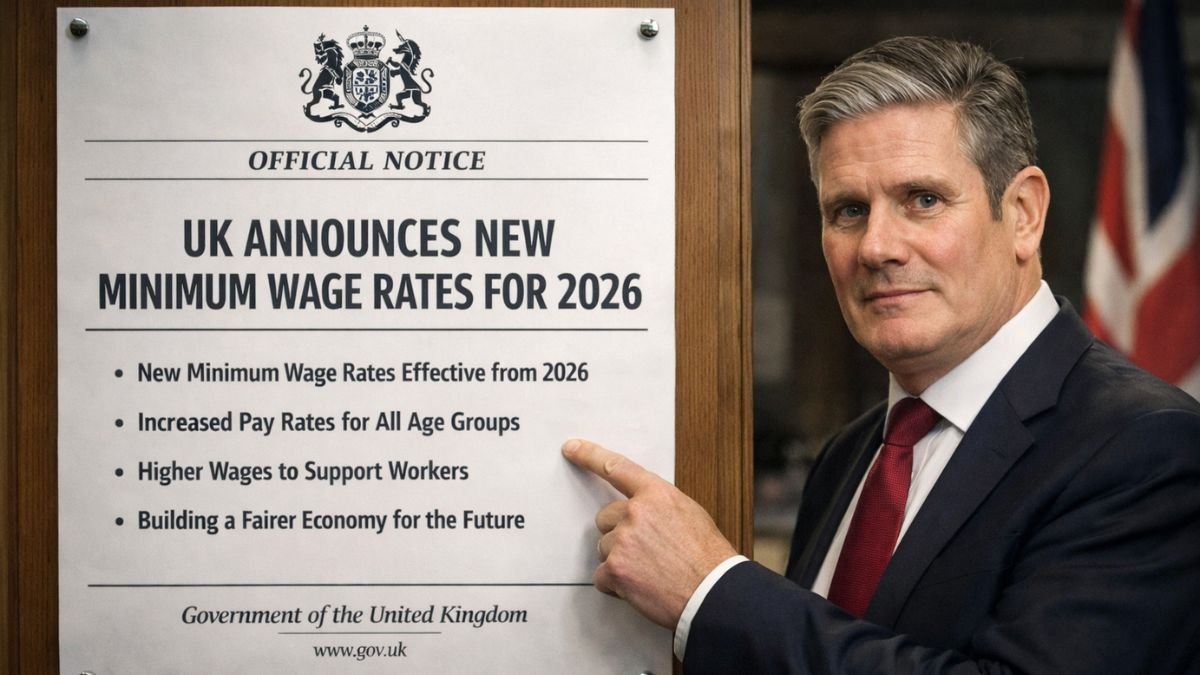
The UK government has officially confirmed new minimum wage rates for 2026, bringing changes that will affect millions of workers across the country. The update comes as part of the government’s wider effort to support households dealing with rising living costs and inflation.
Alongside wage adjustments, the government is also reviewing several benefit programs and support schemes. Many analysts say the changes are connected to the broader DWP payment increase 2026, which includes improvements to benefits like Universal Credit and other welfare payments.
Payment Details
The UK government reviews minimum wage rates every year based on recommendations from the Low Pay Commission. For 2026, the government confirmed an increase designed to help workers keep up with living costs.
| Age Group | Previous Rate | New 2026 Rate | Increase |
|---|---|---|---|
| 23 and over (National Living Wage) | £11.44 per hour | £12.21 per hour | £0.77 |
| 21–22 years | £10.18 per hour | £11.00 per hour | £0.82 |
| 18–20 years | £7.49 per hour | £8.60 per hour | £1.11 |
| Under 18 | £5.28 per hour | £6.40 per hour | £1.12 |
| Apprentices | £5.28 per hour | £6.40 per hour | £1.12 |
The biggest increases are focused on younger workers and apprentices. The government says this change aims to reduce pay inequality between age groups.
Eligibility Criteria
Not every worker is paid the same wage. Eligibility for the minimum wage depends mainly on age and employment status.
Age Requirements
Employees are paid according to their age group:
- 23 or older – National Living Wage
- 21–22 years – Higher National Minimum Wage band
- 18–20 years – Youth rate
- Under 18 – Junior worker rate
- Apprentices – Special apprentice rate
Once an employee turns the next age threshold, employers must increase their pay rate accordingly.
Employment Status
To qualify for the new wage rates, workers must:
- Be legally employed in the UK
- Have an employment contract
- Not be self-employed
- Not be a volunteer
Most part-time and full-time employees qualify.
Impact on Benefits
Higher wages may affect benefit claims. For example, the Universal Credit payment increase and the benefit payment increase UK may be adjusted based on earnings.
However, many households will still receive support under the wider DWP payment increase 2026 reforms.
Payment Dates
The new minimum wage rates are expected to come into effect from April 2026, which is the start of the UK tax year.
Important Dates
| Event | Date |
|---|---|
| Government confirmation of wage rates | Late 2025 |
| Official implementation | April 2026 |
| First paychecks with new rates | April–May 2026 |
Workers should check their April or May payslip to confirm the updated hourly rate.
At the same time, several benefit adjustments linked to the DWP payment increase 2026 will also begin during the same financial year.
How to Claim the Payment
Unlike some government benefits, workers do not need to apply for the new minimum wage rates.
Employers are legally required to pay the correct wage.
Steps for Workers
If you are eligible, the process is simple:
- Continue working under your current contract.
- Employers must update wage payments automatically.
- Check your payslip after April 2026.
- Contact your employer if the rate is incorrect.
Reporting Underpayment
If a worker believes they are being underpaid, they can report it to HMRC’s National Minimum Wage enforcement team.
Employees may also receive back pay if an employer fails to follow the rules.
Connection to Benefits
Workers who receive government support should also check their benefits account because the Universal Credit payment increase and other support may change.
Latest Government Update
Government officials say the wage increase is designed to protect workers from inflation and rising living expenses.
According to policy announcements, the goal is to ensure the National Living Wage reaches two-thirds of median earnings.
Officials also confirmed that welfare payments will continue to be reviewed alongside wages.
Recent statements highlight that the DWP payment increase 2026 will include adjustments to several benefits.
These may include:
- Universal Credit payment increase
- Housing support adjustments
- Pension and disability benefit updates
- Cost-of-living support measures
The government says these updates aim to provide a balanced approach between wages and welfare.
For many households, the combination of higher minimum wages and benefit payment increase UK programs could provide meaningful financial relief.
Conclusion
The new minimum wage rates for 2026 represent one of the most significant pay adjustments in recent years. With higher hourly rates across all age groups, millions of workers will see improved earnings starting in April 2026.
The increase is especially important for younger workers and apprentices, who are receiving some of the largest percentage rises.
At the same time, broader reforms linked to the DWP payment increase 2026 mean that benefits such as Universal Credit may also rise. This combination of wage and benefit adjustments could provide much-needed support to households facing higher living costs.